
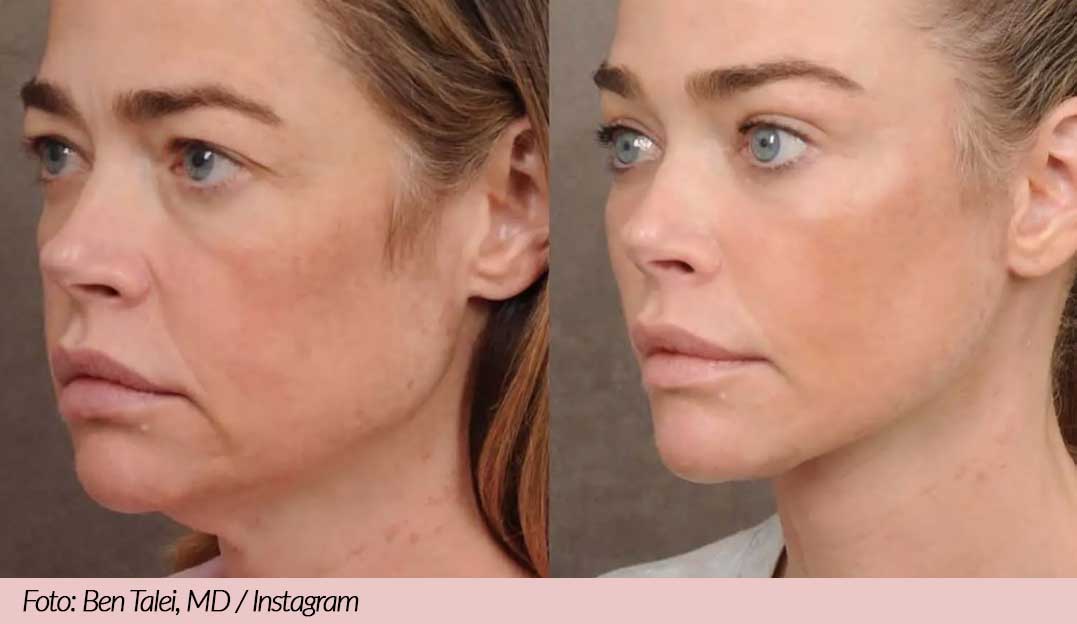
At age 55, Denise Richards decided to undergo a deep facelift and neck lift in late June 2025. What was interesting wasn’t just the procedure itself, but how she spoke about it months later: in March 2026, she shared real photos, explained her motivation, and made it clear that she wasn’t trying to look like someone else, but rather to look better without losing her identity. That nuance, to me, is what makes this case so much more powerful than just another celebrity headline.
In her own words, the actress was essentially saying something very sensible: she didn’t want to look 20, but rather to regain a fresh, firm appearance while still looking like herself. That idea aligns with what several specialists emphasize when discussing the Deep Plane facelift: the goal isn’t to “pull” the skin, but to reposition deeper structures so that the rejuvenation is noticeable yet doesn’t look artificial. And that difference, though it may seem subtle, changes everything.
The results are perceived as an overall improvement in the appearance of the face and neck, not as an unnatural or excessive change.
What exactly was the treatment Denise Richards underwent?
To get to the point, Denise Richards underwent a deep plane facelift, also known as a facelift and deep cervical. The key to this technique is that it acts not only on the skin but also on deeper anatomical planes, below the SMAS, releasing retention ligaments and mobilizing the tissues as a block to reposition them with less superficial tension.
That explains why the procedure generated so much interest. Many people still associate facelifts with a tight, expressionless, or obviously surgically altered face. But the Deep Plane facelift is positioned precisely as the answer to that concern. Instead of tightening the skin as an isolated layer, it targets the areas where tissue sagging has actually occurred over time.
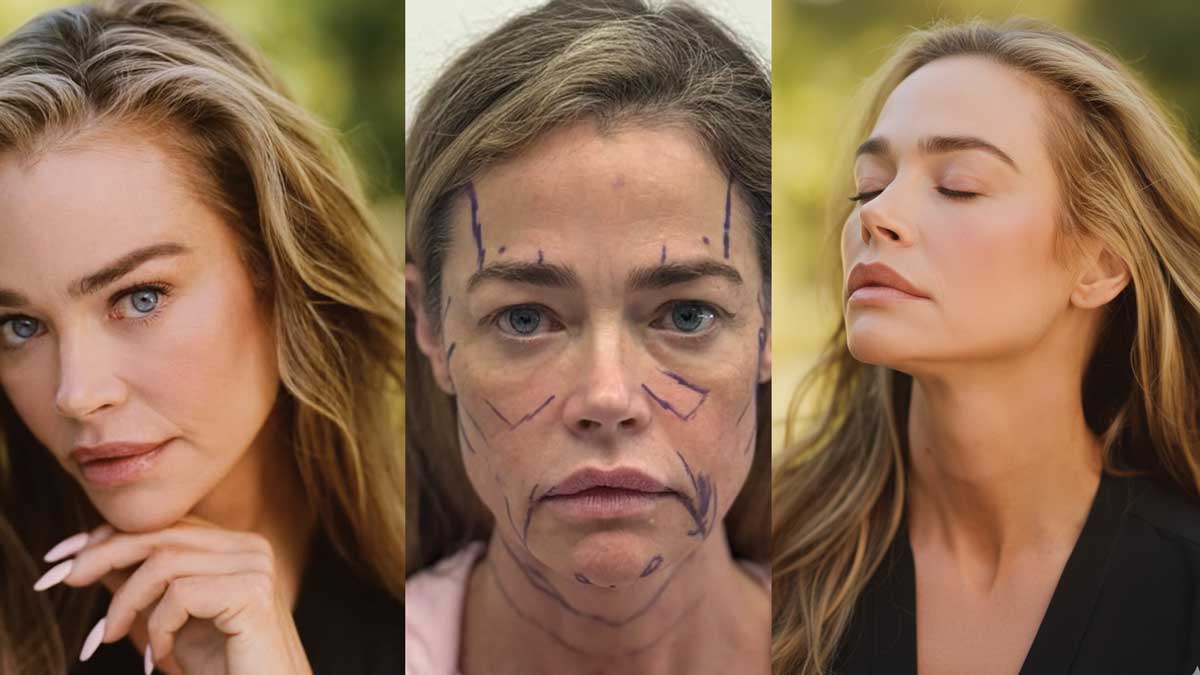
The case study also notes that the neck played an important role. And that makes sense. When a person significantly improves their facial appearance but the neck doesn't keep pace, the result can disrupt the overall harmony. That's why, when someone examines the DeNise Richards, before and after the facelift, they don’t usually focus solely on the cheeks or jawline: they look at how the entire lower part of the face sits, how the neck falls, and how the eyes integrate with the rest of the face.
With that in mind, we invite you to read our guide on how to choose a plastic surgeon, because one of the most important decisions isn’t just “which technique I like,” but rather who has the training, track record, and real-world experience in the surgery you’re considering. Clínica Belba emphasizes the importance of reviewing the surgeon’s specialty, professional integrity, and specific experience with the procedure you’re interested in.
Denise Richards Before and After Her Facelift: What Really Changes in Her Face and Neck
When analyzing the phenomenon of Denise Richards and her facelift, the most common mistake is to think that it all boils down to “it was worse before, it’s better now.” In reality, what makes a before-and-after convincing is the quality of the change, not just its intensity. In Richards’ case, what has drawn attention is that the result does not convey stiffness or a loss of identity. She remains recognizable, but looks more rested, with better facial support and a cleaner transition between her face and neck.

Denise Richards After Her Facelift: When She Had the Surgery and When She Showed Off the Results
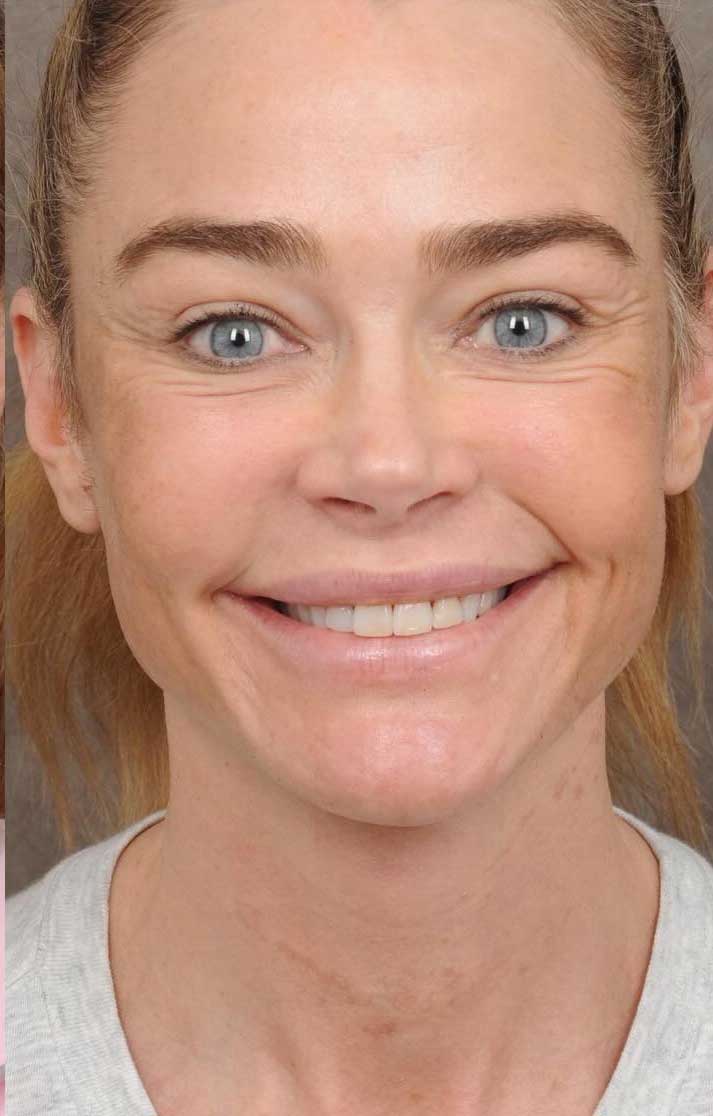
The timing here is quite important. Denise Richards had her surgery in June 2025, but public discussion really took off in March 2026, when she showed off and commented on the results with more hindsight. That time lag is no minor detail: it helps explain why facial surgery shouldn’t be judged too soon. The tissues need time to settle, and the final result isn’t apparent in the first few days—or, often, even in the first few weeks.
That's why there's so much interest in Denise Richards after her facelift is somewhat misleading. The “after” that really matters isn’t the immediate result, but rather the one that has evolved enough to assess naturalness, integration with the neck, facial expression, and the overall quality of the rejuvenation.
This point ties in very well with a common concern expressed during consultations: the anxiety to see results right away. In Clínica Belba’s information on facelifts in Barcelona reminds patients that the process includes a preliminary evaluation, photographs, an explanation of expectations, preparation, surgery in the operating room, and postoperative care. In other words, it’s not just a “before and after”; it’s a complete medical process that must be understood calmly.
Denise Richards Before and After Her Facelift: What This Case Reveals About Hollywood
The Case Denise Richards before and after her facelift also serves as a mirror for something broader: the relationship between cosmetic surgery, fame, and transparency. For a long time, the entertainment industry promoted a very demanding—yet at the same time dishonest—ideal of beauty. Impossible results were celebrated while the procedures behind them were hidden. The fact that a well-known actress is sharing real images and speaking openly about her experience shifts that dynamic somewhat.
I’m not saying that solves the underlying problem, of course. The pressure to look a certain way is still there. But it does open up a more mature conversation. Instead of pretending that facial changes happen by magic, we acknowledge that there’s a procedure involved, a medical decision, a significant life event, and certain expectations.
That conversation also helps ground real-world decisions. Not everyone who looks at Denise Richards needs a full facelift. There are patients with milder sagging—or sagging concentrated mainly on the face, without significant involvement of the neck—who might be better suited for a mini facelift. According to Clínica Belba, this option is typically recommended for mild to moderate sagging, especially when the neck does not yet require more extensive surgical treatment.
What to Learn from the Denise Richards Case If You're Considering a Facelift
The first lesson for me is very clear: don’t idealize a technique just because it worked well for a celebrity. The Deep Plane facelift can indeed produce very natural results, but that doesn’t mean it’s automatically the best option for every face. A high-profile case may inspire; a medical assessment decides. And that assessment should be based on a physical examination, photographs, medical history, an anatomical analysis, and a very honest conversation about limitations and expectations.
The second lesson is to choose a professional with great care. If I were considering facial surgery, I wouldn’t base my decision on a pretty website or vague testimonials. I would look for recognized credentials, a proven track record, specific experience in facial surgery, the number of similar cases performed, the type of follow-up care provided, and the specialist’s ability to explain why they recommend a particular technique for my case. This is exactly what Clínica Belba covers in its guide on how to choose a plastic surgeon: verify their training, specialty, and actual experience with the procedure you’re interested in.
The third lesson is that the context of the team matters as well. If the reader is looking for specialist referrals, it may make sense to check out the websites of plastic surgeons, where the focus is on experience, anatomical expertise, safety, and patient care. Beyond the individual’s name, what matters is understanding whether you’re dealing with a reputable practice that offers sound medical judgment and genuine follow-up care.
And the fourth tip is not to show up for your first consultation with just one question like, “I want this—how much does it cost?” A good first cosmetic surgery consultation should help you answer much more useful questions: which technique is right for you, what results are realistic, what the limitations are, what the recovery will be like, and what signs indicate that now might not be the right time for you. That conversation, done right, is worth far more than any viral before-and-after photo.
Conclusion
The“Denise Richards facelift”phenomenon stood out not only because of the result, but because it turned a facial surgery into a relatable and verifiable story. It wasn’t simply a before-and-after: it was a case with context, a date, an age, a progression, and a public narrative. That made her facelift cease to be perceived as an ambiguous touch-up and instead be seen as a conscious aesthetic decision—well-explained and socially legitimized. That is the key to why it generated so much attention: it didn’t just show a change, but a narrative that many people could understand, compare, and remember.
A good result doesn't depend on copying a celebrity, but on understanding the technique, choosing the right professional, and honestly assessing whether that procedure is right for you. Ultimately, that is the valuable lesson to be learned from this case.
Frequently Asked Questions
What kind of facelift did Denise Richards have?
The articles that analyzed her case note that she underwent a deep plane facelift, that is, a deep facial and neck lift that goes beyond the skin to reposition tissues, resulting in a more natural look.
Did Denise Richards get her neck done, too?
Yes. The case report indicates that, in addition to the facelift, neck treatment was performed to maintain harmony between the face and the neck area.
When did Denise Richards have surgery?
The surgery took place in June 2025 and spoke publicly about the outcome months later, in March 2026, when the healing process had progressed enough to allow for a better assessment of the final result.
What is the difference between a Deep Plane facelift and a traditional facelift?
The Deep Plane technique targets deeper layers, releasing ligaments and repositioning tissue in blocks, whereas traditional facelifts are more closely associated with superficial skin tightening. That is why the Deep Plane technique is associated with more natural-looking results when it is properly indicated and performed.